

Restaurants
Kashmir sweet house: Pakistani mithai shop in The Hague
In this Pakistani mithai shop in a residential area in The Hague, you will find Pakistani and Indian sweets such as barfi, ladoo and the best jalebi and gulab jamun!
Could you use some sweetness in your life? Then I know a spot that will put you in a sweet mood. Right in the middle of a residential area and anyone who doesn't know better might just walk right past this little shop. My advice: don't do that.
Halwa in the Hofstad
The Hague has the largest Hindu community in the Netherlands. Anyone looking for a gorgeous dress with gold for a wedding, for example, or craving dosa, biryani and ras malai, will hardly ever miss out in the royal city (and nowadays surrounding municipalities too).
Come on a Mooncake food tour with me!
Sweet shop
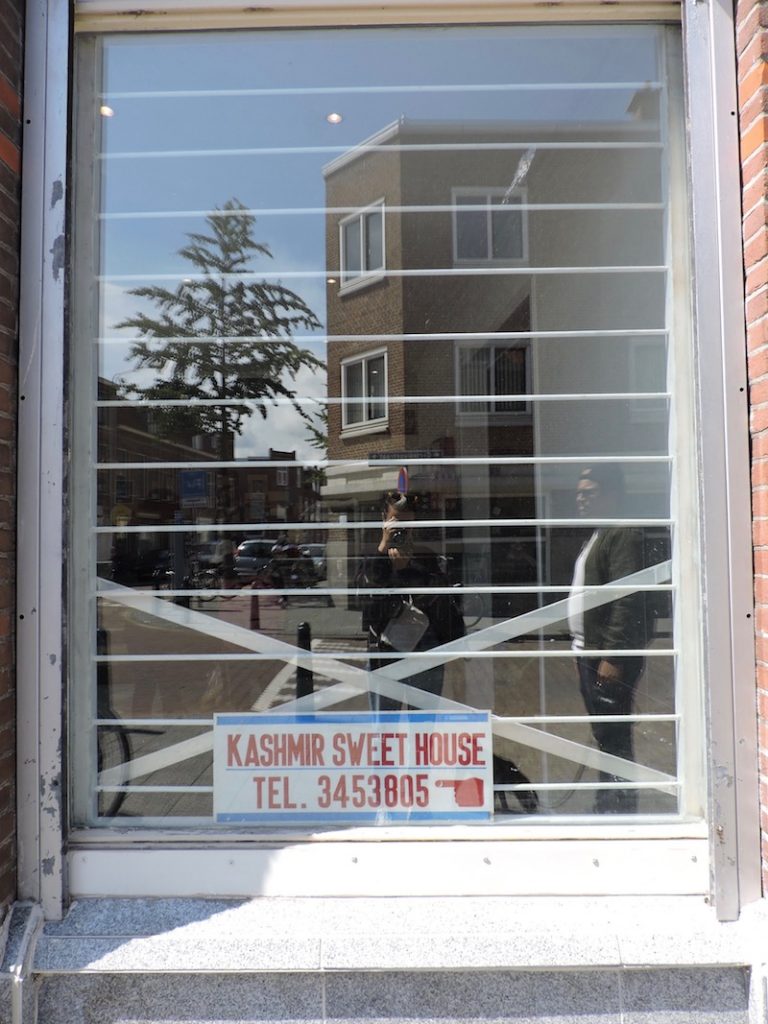
In The Hague there stands a house. A sweet house, to be precise. This mithai shop (mithai meaning sweet) run by Pakistani owners is perhaps the oldest of its kind in the whole of the Netherlands. And as you can read below, quite simply the best too:
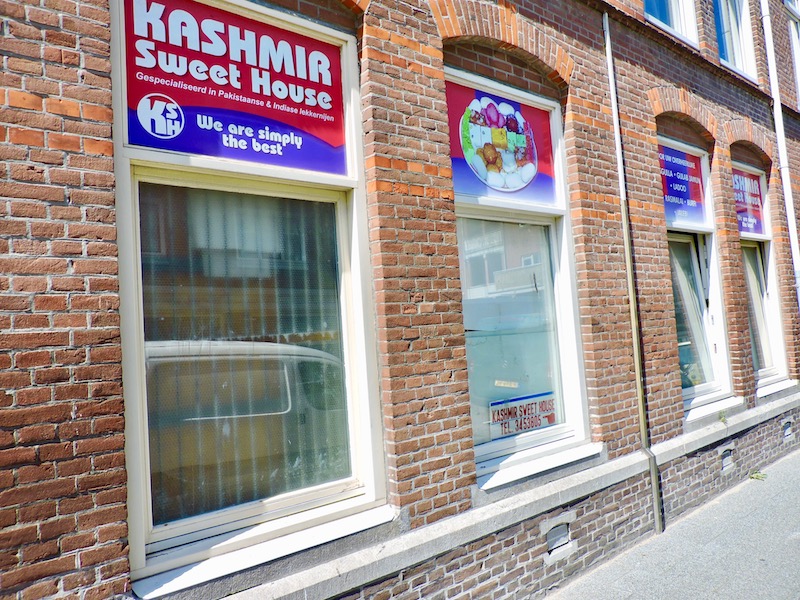
You can go there for, among other things, barfi in all the colours of the rainbow, laddoo, gulab jamun and jalebi.
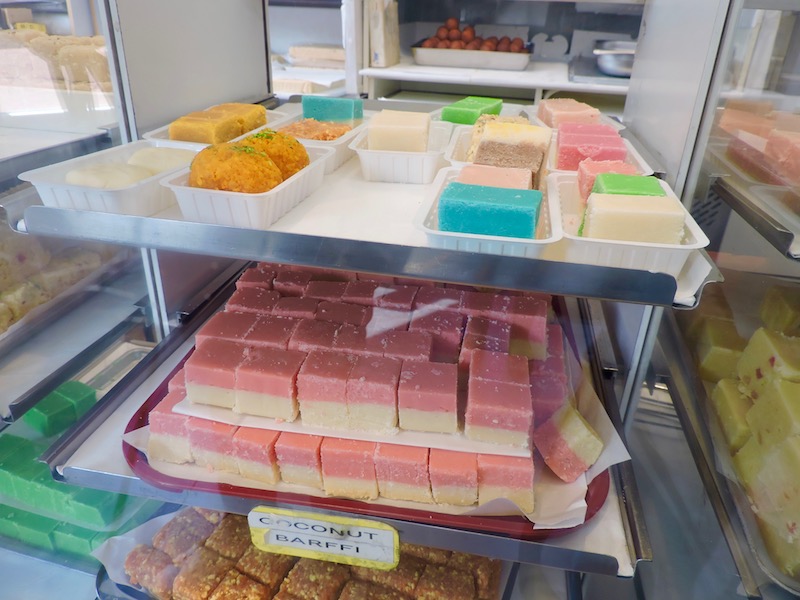
If you have never eaten this before, Kashmir Sweet House is a great starting point. It is said that they sell the best jalebi and gulab jamun in the Netherlands. I haven't tasted them all yet, so I can't confirm that just yet :). But I do know that they are very good.
Cardamom, coconut and saffron
Pakistani and Indian sweets come in many shapes and forms. Ghee and (condensed) milk are often used, and you will also see ingredients such as cardamom, nuts, dates, carrot, saffron and coconut. Pistachio and often food colouring are used to give the barfi its green colour. There are sweets based on besan (chickpea flour a.k.a. gram flour) and on lentil and corn flour.
Do not do this patisserie the injustice of thinking that everything is purely sweet. There is little more comforting in this world than milky, fudge-like barfi with cardamom and the nutty notes of ghee in the background. And patisa, a.k.a. soan papdi, deserves praise from me too. A crumbly texture similar to halva, but delightfully crunchy and made with besan (gram flour). I tried it with hazelnuts and chocolate.
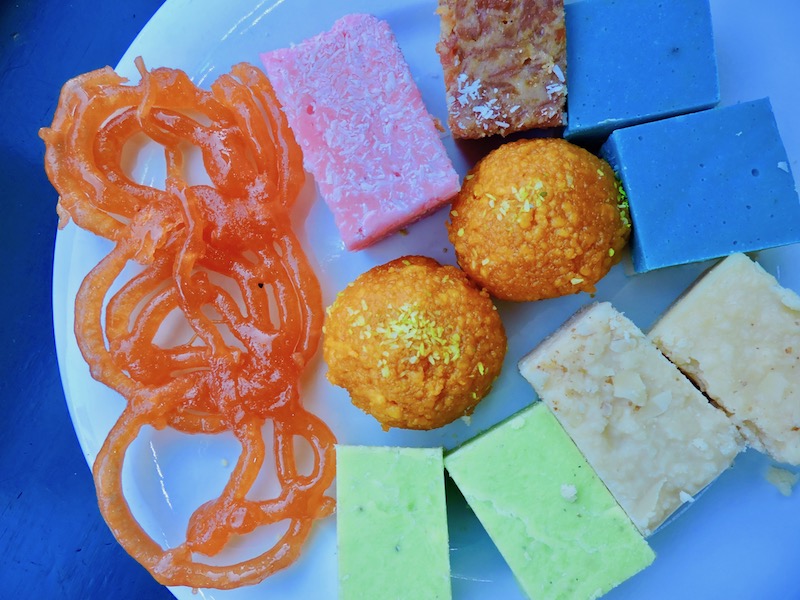
Gulab jamun
Kashmir Sweet House is known for its homemade gulab jamun – don't skip those! They are the dark orange balls you can see on the bottom right of the photo here:
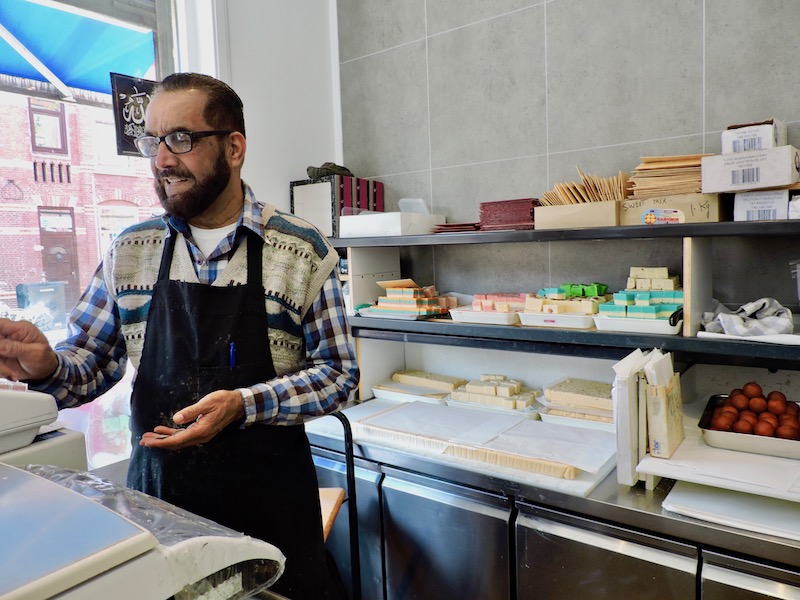
Gulab means rose water and jamun probably refers to the shape of the jamun fruit – a type of plum, look, here you can see them:
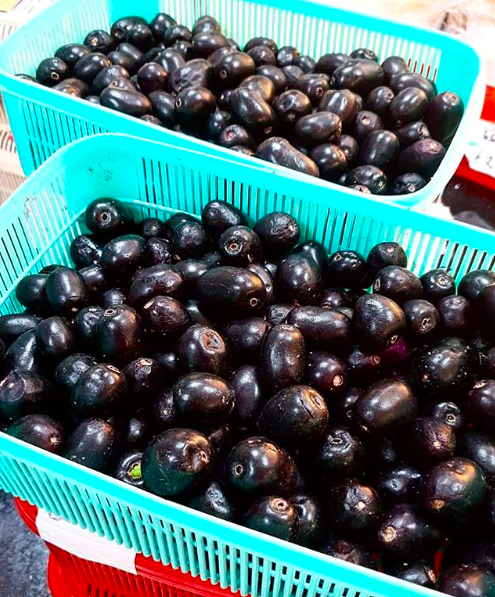
Gulab jamun, which incidentally has roots in Persia, is made from (condensed) milk, milk powder or khoya, rose syrup and cardamom. The dough is deep-fried in ghee. Khoya (or mawa) is a dried or reduced milk-based ingredient similar to ricotta (though drier). Khoya is used in many Indian and Pakistani sweets such as barfi, gulab jamun, pedha and halwa. You have drier variants, such as powdered khoya, and moister variants, which are used for gulab jamun.
Sometimes saffron syrup is made to let the balls soak in. When serving, they are also sometimes sprinkled with pistachio, coconut or varak. If gulab jamun is made with love, it is a delicate dessert.
Varak
Varak or vark is silver leaf used to garnish sweets (as well as dishes such as biryani). This practice originates from Ayurveda. Silver is said to have antibacterial properties, while gold is said to be an aphrodisiac. Leaf silver and gold have no taste, but they sure do shine! A lovely sweet made with varak is kaju ki barfi – made from cashews, milk, ghee and topped with a layer of silver. Wonderful to give as a gift.
Culinary heritage
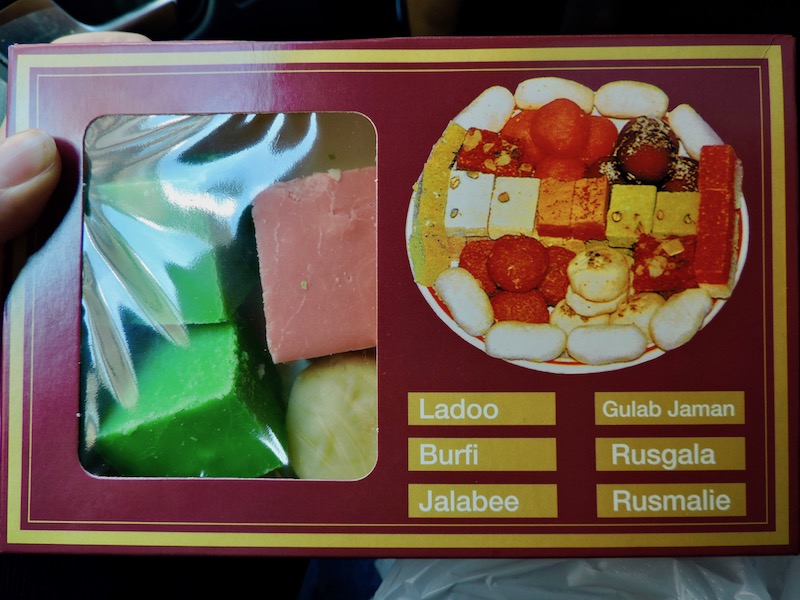
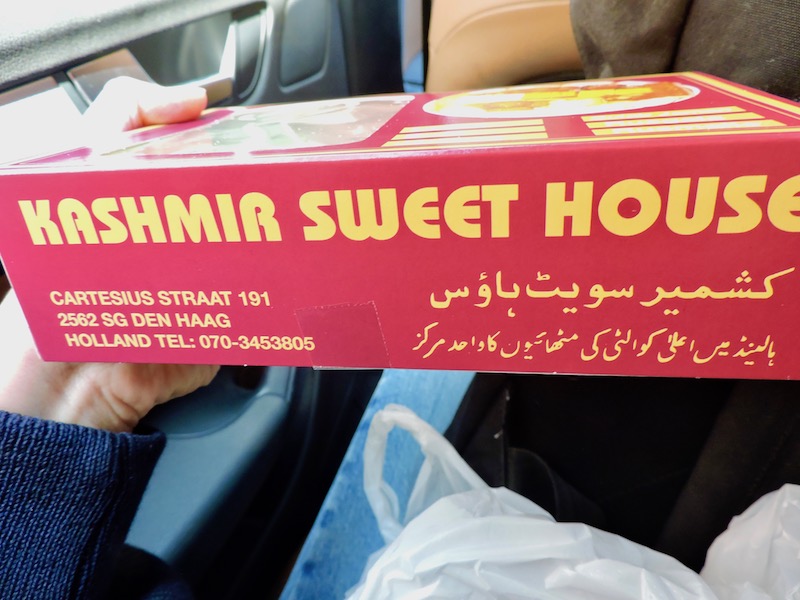
When I was at Kashmir Sweet House I took a box of assorted bits with me. To eat before, after or during a meal. And actually I think that every resident of this country should have tried these sweets. This is culinary heritage and inextricably linked to The Hague.
NOTE: Do bring some cash, when I was there I couldn't use card, you see.
Another random but fun fact: in India, sweets like khada prasad and boondi ladoo also form an important part of offerings to the gods in temples.
Fancy getting started yourself? Mooncake – The Baking Book does the Dutch-Hindustani Massala family have its own chapter with recipes for e.g. jalebi.
Feeling peckish? Come with me on a food tour.
What are you eating here?
Pakistani and Indian sweets such as ladoo, halwa, barfi, jalebi, rasgulla and gulab jamun.
Special features
This is probably the oldest mithai shop / sweet house in the Netherlands!
Collection and delivery
Takeaway
Other information
Alcohol: No
Halal: No
Kosjer: Yes
Vegetarian: Yes
Vegan: No